

The Only Guide You Will Need To Determine Your Natural Hair Type

How to Identify Your Hair Type and Choose the Right Tools
Your hair type is determined by two factors: your curl pattern (classified 1A through 4C using the Andre Walker system) and your strand diameter (fine, medium, or coarse). Knowing both tells you exactly which brushes, combs, and products will work for your hair — and which will damage it. Most people discover they have a primary type with variations across different sections of their head.
There are far more than five different hair types, and hair classification is more nuanced than the simple "straight versus curly" label most people grow up with. Understanding your specific hair type is the foundation of a effective hair care routine—and it directly determines which brushes, combs, and products will actually work for your hair instead of against it.
Many people have multiple hair types across different sections of their head. Your roots might be straight while your ends curl; your crown might be fine while your nape is thick. This complexity seems daunting, but once you understand the system, selecting the right tools becomes straightforward and saves you hundreds of dollars on ineffective products.
Step 1: Determine Your Hair Diameter
Hair diameter refers to the width of a single strand—it's the first classification you need. The easiest way to determine this is by comparing a single strand of your hair to sewing thread.
Fine hair is thinner than sewing thread. It's delicate and prone to breakage if you use heavy products or aggressive brushing. Fine hair benefits from lightweight hair brushes and gentle detangling tools that won't weigh it down or create tension.
Medium hair is roughly the same thickness as sewing thread. This is the most common diameter and works well with a wide range of standard hair tools.
Coarse or thick hair is noticeably thicker than sewing thread. Thick hair can handle more robust brushes and is less prone to breakage, but it requires tools with adequate tooth spacing to avoid snagging.
Hair diameter is crucial because it affects how natural oils distribute through your strands. Fine hair can't distribute oils far, so fine-haired people often have oily roots but dry ends. Coarse hair distributes oils more slowly, so it tends to feel dry overall. Understanding this helps you choose products and tools that work with your hair's natural tendencies rather than fighting against them.
Step 2: Understand the Andre Walker Hair Classification System
The Andre Walker system categorizes hair into four main types (1-4) and subdivides each into three subtypes (A, B, C), creating 12 distinct categories:
Type 1: Straight Hair
1A—Perfectly straight. Hair lies flat against the scalp with no wave or curl. Very shiny, often oily, and rarely tangled. Best tools: paddle brushes and wide-tooth combs that won't disrupt the straight pattern.
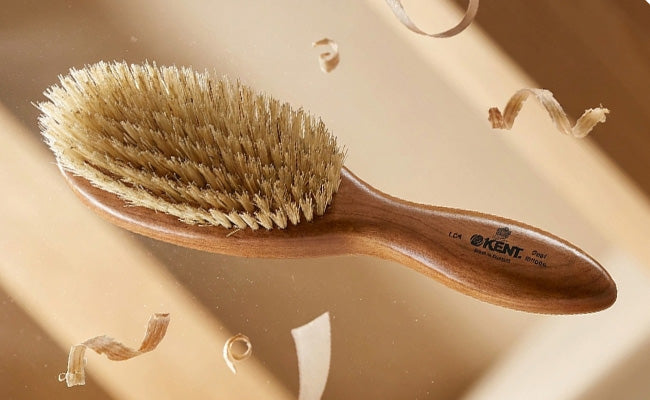
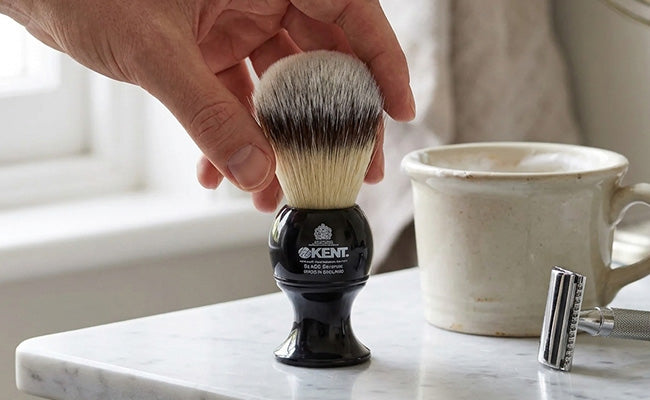
1B—Straight with body. Hair is straight but with slightly more volume and texture than 1A. Still primarily straight with minimal curl. Works well with Kent brushes designed for smoothing.
1C—Straight with slight wave. The dividing line between straight and wavy. Hair has minimal curl at the ends or under certain humidity conditions. Benefits from brushes that enhance shine without flattening texture.
Type 2: Wavy Hair
2A—Fine, loose waves. Hair has a loose S-pattern but lies mostly flat. Prone to frizz in humidity. Needs lightweight brushes and products that enhance waves without weighing them down.
2B—Medium waves. Clear S-wave pattern throughout. Hair is naturally voluminous. Works well with styling brushes that define and shape the wave.
2C—Tight, defined waves. Hair has pronounced S-waves that are almost curly. More moisture retention than 2A or 2B. Requires brushes and combs with wider tooth spacing to maintain wave definition.
Type 3: Curly Hair
3A—Loose, springy curls. Hair has a clear spiral curl pattern with good shine. Curls are roughly the size of a pen barrel. Needs detangling combs with wide spacing and gentle brushes to avoid frizz.
3B—Tighter, springy curls. Curls are tighter than 3A, about the size of a marker. More prone to frizz and breakage. Benefits from specialized curling brushes and combs designed for curl-prone hair.
3C—Tight, corkscrewcurls. Spiral curls are very defined and tight. High density and beautiful natural texture. Requires detangling combs with maximum spacing and moisture-retaining tools.
Type 4: Coily/Kinky Hair
4A—Tight coils with definition. Hair has a tight, defined coil pattern and significant texture. Prone to shrinkage (hair appears shorter when dry than wet). Needs wide-tooth combs and brushes designed specifically for coily textures.
4B—Coils with less definition. Hair coils without clear spiral shape. More fragile than 4A and prone to breakage if handled roughly. Requires the gentlest detangling approach and scalp-sensitive brushes.
4C—Zigzag coils, very fragile. The most delicate hair type with the tightest pattern. Requires specialized care with wide-tooth combs only and extremely gentle handling. Many professional stylists recommend avoiding traditional brushes altogether for this type.
How to Test Your Hair Type at Home
The most accurate test is observation on a regular hair-wash day, but you can also do a strand test:
- Take a clean, product-free single strand of hair
- Hold it horizontally and observe its natural shape (does it fall straight, wave, or curl?)
- Let it hang down and watch how it behaves
- Repeat this test in 3-4 different areas of your head (crown, sides, nape, underneath)
- Note where your hair type is most consistent and where it varies
Document your findings by hair section. Most people discover they have a primary type with secondary variations—for instance, 2B on top with 3A underneath, or 1C that becomes 2A in high humidity.
Combining Hair Type and Diameter for the Perfect Tool Match
Your ideal hair tool depends on both factors:
Fine + Straight (1A-1C): Lightweight paddle brushes, smoothing brushes with soft bristles. Avoid heavy boar-bristle brushes that can overwhelm fine hair.
Medium + Straight to Wavy (1B-2B): Versatile Kent brushes work well; both paddle and round brushes are suitable. Boar-bristle options add shine without heaviness.
Coarse + Straight (1A-1C): More robust brushes with natural bristles. Boar bristle is ideal for distributing natural oils through thick, straight hair.
Wavy to Curly (2B-3C): Wide-tooth combs are essential for detangling. Avoid paddle brushes on wet curls. Finger-combing or specialized curl brushes are best.
Very Curly or Coily (3B-4C): Wide-tooth combs only. Gentle detangling requires combs designed specifically for curl-prone hair. Many people in this category skip brushes entirely and use combs exclusively.
Why This Matters: The Reality of Wrong Tool Selection
Using the wrong brush or comb for your hair type causes breakage, frizz, damage, and breakage that can take months to recover from. A paddle brush on curly hair breaks the curl pattern and causes frizz. Fine-hair people using heavy boar-bristle brushes end up with limp, damaged hair. Coarse-haired people using flimsy brushes get frustrated because nothing works.
Once you match your hair type to the right tool, styling becomes easier, your hair looks healthier, and you actually use what you buy instead of letting expensive products and tools gather dust.
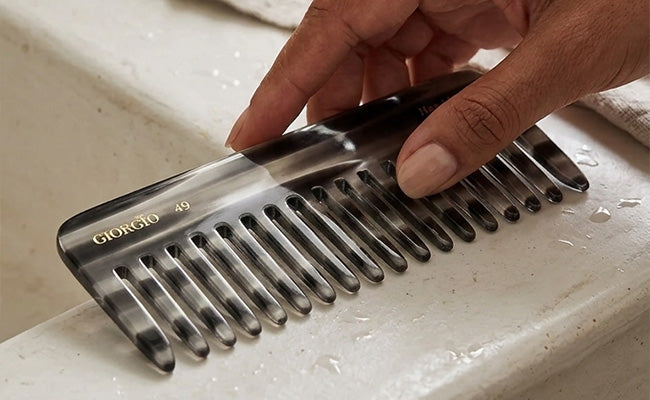
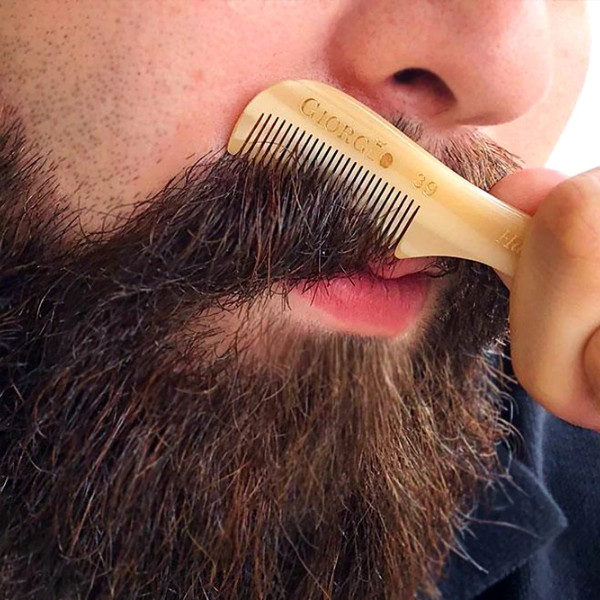
Explore our Kent brush collection for classic options across all hair types, or browse Giorgio professional combs for specialized curl and detangling needs.
FAQ: Finding Your Hair Type and Choosing Tools
Can my hair type change?
Hair type can shift due to hormonal changes (pregnancy, menopause), aging, health changes, or damage from heat styling or chemical treatments. Regular reassessment every 1-2 years helps you stay on top of changes and adjust your tool choices accordingly.
What if I have different hair types on my head?
This is extremely common. Create a map of your hair types by section, then choose tools that work for your most problematic area, or select versatile options that work across multiple types. A wide-tooth comb, for instance, works for any curl type from straight to coily.
How do I know if I have fine or thin hair?
Fine refers to strand diameter (thickness of individual hairs); thin refers to density (how many hairs you have). You can have fine hair with high density, or thick hair with low density. Test diameter with the thread comparison; check density by looking at your scalp—if you can easily see it, you have lower density.
Does hair type affect product choice?
Fine hair needs lightweight products; coarse hair can handle heavier creams and oils. Curly hair needs moisture-retaining products; straight hair needs smoothing products. Matching products to type prevents wasting money on ineffective formulations.
Can I change my natural hair type with styling?
Styling can temporarily modify appearance—you can blow-dry waves into straighter patterns, or curl straight hair. But the underlying hair type doesn't change without heat damage or chemical alteration. The healthiest approach is working with your natural type, not fighting it.
What's the best brush for mixed hair types?
A wide-tooth detangling comb or a gentle paddle brush works across most types. If your hair varies significantly (fine on top, curly underneath), a wide-tooth comb is your safest choice since it works for delicate, fine, and curly hair without damaging any type.
How often should I reassess my hair type?
Assess annually or whenever you notice significant changes. Major life events, new medications, stress, or damage can shift your hair type. A simple observation check takes five minutes and can save you months of using the wrong products.
Is the Andre Walker system accurate for all ethnicities?
The system was created by Andre Walker, who worked primarily with textured and curly hair, so it provides more nuance in the Type 3-4 range than Type 1-2. It's a useful framework for all hair types, though some people with very coily hair prefer more specialized classification systems that provide additional subcategories.
Can product buildup change how my hair looks?
Heavy product buildup can make fine hair look thinner and straighter, or weigh down waves and curls. Regular clarifying washes help you see your true hair type. Similarly, damage from heat or chemicals can change appearance. Working with clean, undamaged hair gives you the truest assessment.
Should I choose tools based on my goal look or my natural type?
Choose tools that protect your natural type first. Then use styling tools strategically to achieve your desired look. A person with naturally wavy hair might use a straightening brush occasionally, but their everyday brush should suit their natural wave pattern to prevent damage.

%20and%20your%20strand%20...)
Leave a comment
This site is protected by hCaptcha and the hCaptcha Privacy Policy and Terms of Service apply.