
Does Brushing Hair Stimulate Growth?

Does Brushing Hair Actually Stimulate Growth? The Truth
Brushing hair does stimulate growth conditions — but only when done correctly. Gentle daily brushing with a quality boar bristle brush improves scalp circulation, distributes sebum from root to tip, and keeps follicles healthy. Done aggressively or with the wrong tool, brushing causes breakage and scalp damage that actively prevents growth. The technique and tool matter as much as the habit itself.
natural scalp oils (sebum) that travel down the hair shaft, coating and protecting it. This improves overall hair health by transporting oxygen and nutrients to hair follicles, which can create conditions favorable for growth. However, there's a critical caveat: the way you brush matters enormously. Aggressive or excessive brushing causes breakage, hair loss, and scalp damage that completely negates any growth benefits.
The relationship between brushing and hair growth is real but nuanced. The goal is optimal brushing—frequent enough to stimulate sebum production and blood flow, but gentle enough to avoid damage. That's where most people go wrong.
How Often Should You Actually Brush Your Hair?
The popular myth that you need 100 brush strokes daily is outdated advice with no scientific basis. The American Academy of Dermatology has debunked this entirely. Modern research shows that excessive brushing actually causes more harm than benefit.
In a study tracking brushing frequency, scientists found that people who brushed excessively showed significantly more hair loss after four weeks compared to those who brushed moderately. However, people who didn't brush at all showed the least sebum production and the most scalp issues.
The sweet spot is brushing once or twice daily with gentle, intentional strokes. Morning brushing distributes sebum from scalp to ends; evening brushing removes daily accumulation and prepares hair for sleep. This frequency stimulates healthy sebum production without triggering breakage or stress on follicles.
Why Brush Type Matters for Hair Growth
Not all brushes create equal results. A high-quality boar bristle brush actually stimulates growth, while a low-quality synthetic brush does the opposite.
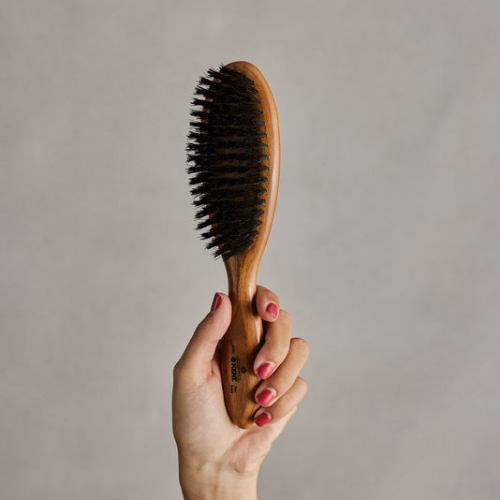
Boar bristle brushes are made from the same organic material that forms human hair. When you brush with boar bristles, they mimic natural sebum and distribute it efficiently through your hair. They also massage the scalp gently, increasing blood circulation and nutrient delivery to follicles. The bristles are firm enough to grip hair without snagging, and the natural texture prevents static and frizz.
Synthetic brushes with plastic bristles create friction that damages the cuticle layer and causes breakage. They don't distribute natural oils—instead, they strip sebum away, leaving hair dry and brittle. Plastic bristles are also more prone to snagging and pulling, which weakens hair and can cause traction alopecia with repeated use.
If you want brushing to actually support hair growth, invest in Kent brushes with natural bristles. The difference in hair health becomes visible within weeks.
The Right Brushing Technique for Growth Stimulation
Technique is as important as tool selection:
- Start at the scalp, not the ends. Place your brush at the roots and use medium pressure—firm enough to feel the bristles massaging your scalp, but not so hard that it's uncomfortable. Work in sections.
- Use long, smooth strokes. Brush from roots toward ends in one continuous motion. Avoid short, aggressive sawing motions that snap hair and damage the cuticle.
- Brush when hair is dry or damp, not soaking wet. Wet hair is most fragile and prone to breakage. Wait until hair is at least 60% dry before brushing.
- Focus on the scalp, not just the ends. The scalp massage is what stimulates growth. Don't spend all your time detangling ends—that doesn't support growth.
- Be gentler with longer hair. Longer hair has older cells that are more fragile. Use lighter pressure as you work toward the ends.
The goal is to feel a light massage sensation on your scalp. If your brush pulls or causes discomfort, you're using too much pressure or the wrong brush.
When Brushing Hurts Hair Growth
Certain conditions make aggressive brushing counterproductive:
If you have scalp sensitivity or inflammation: Reduce brushing frequency to once daily and use extremely gentle pressure. Focus on wide-tooth combs instead of brushes. Scalp health is foundational to growth.
If you have fine or fragile hair: Use a soft-bristled detangling brush instead of firm boar bristles. Reduce to once daily. Fine hair benefits from stimulation, but the cost of breakage is too high if your brush is too aggressive.
If you're experiencing hair loss beyond normal shedding (more than 50-100 hairs daily): Stop aggressive brushing temporarily and see a dermatologist. Increased shedding often signals a health issue that brushing will worsen.
If you have tight curls or coily hair: Avoid traditional brushes entirely. Curly and coily hair responds better to wide-tooth detangling combs or finger-combing. Brushes disrupt curl pattern and cause breakage in this hair type.
The Growth-Supporting Hair Routine
Brushing alone doesn't create growth. Combine it with these practices:
- Brush once or twice daily with a quality boar bristle brush using gentle, deliberate strokes focused on the scalp.
- Use warm water for final rinse to smooth the cuticle and enhance sebum distribution.
- Avoid heat styling on days you use boar bristle brushes—the combination can overstimulate scalp oils.
- Protect hair while sleeping with a silk pillowcase to prevent friction and breakage.
- Get regular trims (every 6-8 weeks) to remove damaged ends that consume growth energy.
- Manage stress and sleep—hair growth is controlled by hormones and stress disrupts the growth cycle.
- Ensure adequate protein and iron intake—hair is made of protein and needs iron for growth.
The brush is one tool in the growth equation. It works best when combined with internal health, scalp care, and protective styling practices.
FAQ: Brushing and Hair Growth
Can brushing make your hair grow faster?
Brushing stimulates blood flow and sebum production, which create conditions favorable for growth, but it doesn't override your genetic growth rate. You can't actually grow hair faster than your body's natural cycle (approximately 6 inches per year on average). What brushing does is prevent loss and breakage, allowing your hair to reach its full growth potential without being damaged.
How long does it take to see results from proper brushing?
Improved scalp health and shine become visible within 2-3 weeks of consistent, gentle brushing with a quality boar bristle brush. Actual growth results (measurable length increase and thickness) take 8-12 weeks because you need to see new hair growing from the follicle, plus time for that hair to become noticeable.
Is boar bristle brush better than paddle brush?
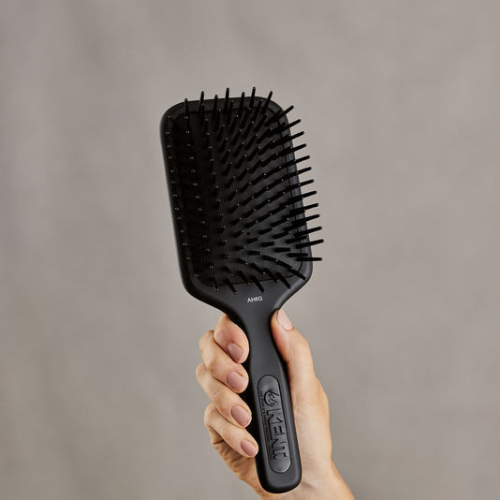
For growth stimulation specifically, boar bristle is superior because it distributes natural oils and massages the scalp effectively. Paddle brushes are better for detangling large sections of hair quickly. Ideally, use boar bristle for stimulation and growth, then a paddle brush for styling and detangling.
Can brushing cause hair loss?
Aggressive brushing, brushing wet hair, or using poor-quality brushes causes mechanical hair loss (breakage) and can damage follicles with repeated traction. Gentle brushing with quality tools supports growth and prevents loss.
Should I brush my hair every day?
Once or twice daily with a boar bristle brush is ideal for growth stimulation. More than twice daily is excessive; less than once daily doesn't provide enough scalp stimulation for optimal sebum production and blood flow.
What if my scalp is oily—will brushing make it worse?
Counterintuitively, oily scalps often benefit from proper brushing. An oily scalp usually means sebum is being overproduced in response to stripping or damage. Gentle brushing with a quality boar bristle brush helps distribute oil naturally rather than letting it accumulate at the root. Within a few weeks, your scalp often balances itself.
Can you brush hair that's already damaged or breaking?
Damaged or breaking hair can still be brushed, but only with a soft-bristled or wide-tooth comb rather than a firm brush. Focus on the scalp, not the damaged ends. The goal is stimulation without causing more breakage. Consider getting a trim to remove severely damaged hair before starting a growth routine.
Do you need a special brush for scalp massage?
A high-quality boar bristle brush does double duty—it distributes sebum while massaging your scalp. You don't need a separate scalp massage tool. Regular, intentional brushing with a good brush serves both purposes.
Is brushing enough to grow long hair?
Brushing is necessary but not sufficient. Long hair requires protection from damage, regular trims, deep conditioning, heat protection, and internal nutrition. Brushing optimizes one piece of that equation—scalp health and sebum distribution—but you need the full routine for sustainable growth.
What type of brush is best for different hair types?
Straight to wavy hair: boar bristle brush for growth stimulation. Curly hair: wide-tooth comb, never brush. Fine hair: soft-bristled brush to avoid breakage while still getting stimulation. Coarse hair: firm boar bristle brush. Match your brush to your hair type first, then use the proper technique.


1 comment
Looks like for men.
Women brushes to use w blow drying as well?
Cathy
Leave a comment
This site is protected by hCaptcha and the hCaptcha Privacy Policy and Terms of Service apply.