
How to Clean a Hair Brush: A Step-by-Step Guide for Every Type
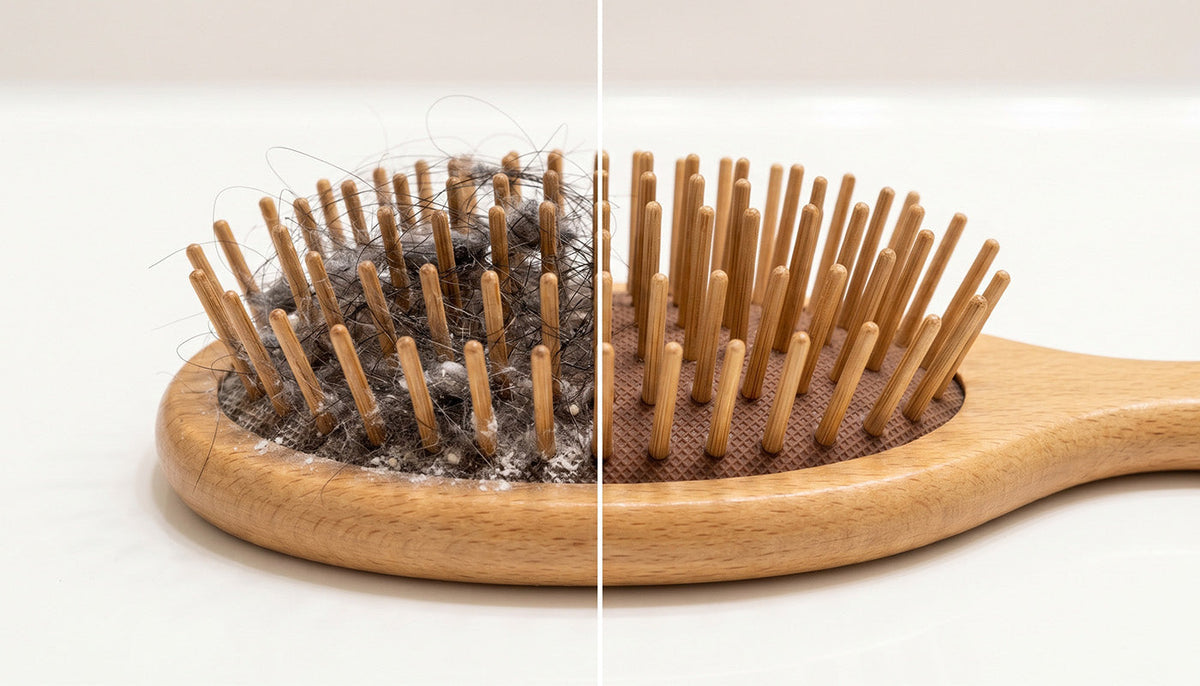
Look closely at your hair brush. That grey fuzz at the base of the bristles is a mix of shed hair, dead skin cells, dust, lint and dried-on product. Every time you brush, some of it goes back onto your clean hair.
Cleaning a brush takes just a few minutes, but the right method depends on what it's made of. Soaking a plastic brush is fine; soaking a wooden, boar bristle or cushion brush can ruin it. Here's how to clean each type properly — and how to make a good brush last for years.
How Often Should You Clean Your Hair Brush?
- Remove loose hair: every few uses, or whenever you see it building up.
- Deep clean: Cleveland Clinic dermatologist Dr. Melissa Piliang recommends every one to two weeks for most people (quoted by TODAY).
- If you use a lot of product (styling creams, gel, hairspray, dry shampoo): about once a week.
- If you use little product: every two to three weeks is usually enough.
What You'll Need
- A brush cleaning tool or a rat-tail comb — the Kent LPC3 Hair Brush Cleaning Tool ($6.99) is made for this
- A bowl of lukewarm water (never hot)
- A gentle soap
- An old soft toothbrush or small cleaning brush
- A clean towel
Step 1 (All Brushes): Remove the Hair
Slide the cleaning tool or the tail of a comb under the matted hair at the base of the bristles, lift it up, and pull it out. Work around the brush from the sides as close to the pad as you can. For round brushes, snip through the wrapped hair with small scissors first so it pulls away easily.
If you only do one thing, do this. Pulling out the hair regularly keeps the brush working and makes the deep clean much quicker.
How to Clean a Plastic or Nylon Brush
Plastic brushes with no cushion and no wood are the easiest to wash.
- Remove the hair (Step 1).
- Fill a bowl with lukewarm water and a few drops of gentle shampoo or soap.
- Submerge the brush and swish it around. Leave to soak for a few minutes if it has a lot of buildup.
- Scrub the base and between the bristles with a toothbrush.
- Rinse under running water.
- Shake off excess water and let it air-dry bristles-down on a towel.
Note: if your plastic brush has a rubber cushion pad with a small air hole, treat it like a cushion brush below instead — water trapped inside the cushion can cause mildew.
How to Clean a Wooden or Boar Bristle Brush
Wood swells and can crack when soaked, and natural bristle can become brittle. The rule is simple: wash the bristles, not the brush.
- Remove the hair (Step 1).
- Mix a small amount of gentle soap into lukewarm water.
- Dip only the tips of the bristles into the water — keep the wooden base and handle dry — or dip a toothbrush and brush it through the bristles.
- Gently work the soapy water through the bristles.
- Rinse by dipping the bristle tips in clean water, or using a rinsed toothbrush.
- Wipe the wood with a damp cloth, then dry it with a towel.
- Lay the brush bristles-down on a towel to dry naturally at room temperature so water drains away from the wood.
Don't dry it with a hair dryer or on a radiator. Prolonged dry heat can make natural bristle brittle and warp wood.
How to Clean a Cushion Brush (Including Mason Pearson)
Cushion (or "pneumatic") brushes have bristles set into a rubber pad with a tiny air hole. They need the most care because water, oil and chemicals can get into the cushion and break down the rubber.
Mason Pearson's own care instructions are a good guide for any cushion brush:
- Dry clean often. Loosen hair with a comb from the sides, then draw a cleaning brush across the bristles end to end, then diagonally.
- Wash occasionally. Mason Pearson says grease in contact with the rubber pad causes it to deteriorate, so wash more often if oil or product builds up.
- Make a lather of lukewarm, never hot, soapy water. Mason Pearson specifically advises against detergents, ammonia, petroleum-based products or shampoos on its brushes — use a mild soap.
- Dip the cleaning brush — not the hairbrush — into the suds, and brush it through the bristles and lightly over the surface of the pad.
- Rinse the same way, with a cleaning brush dipped in clean water.
- Shake off excess water and dry bristles-down at room temperature. Never block the small air hole in the cushion.
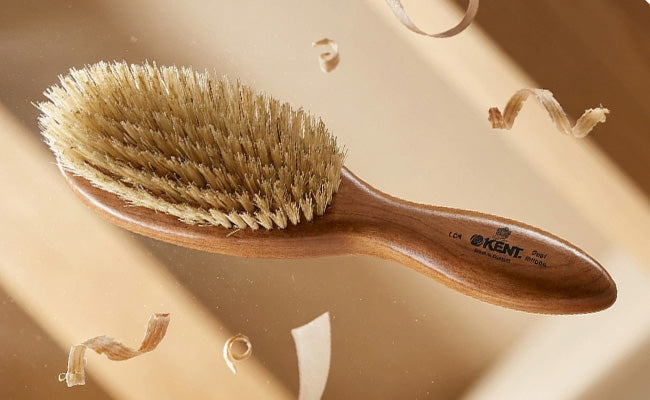
Kent cushion brushes such as the CSGL Classic Shine should be cleaned the same way.
How to Clean a Comb
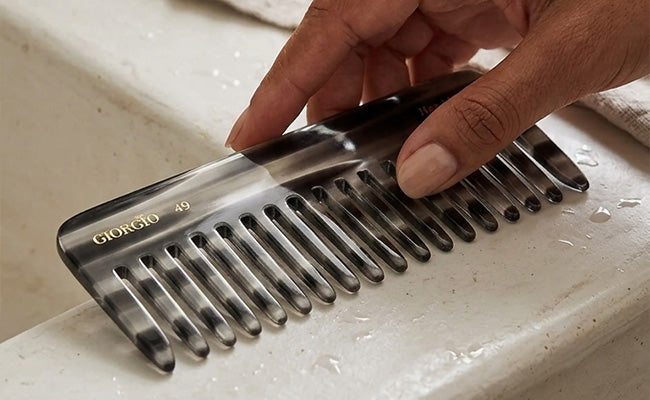
- Cellulose acetate and plastic combs (including handmade Kent and Giorgio combs): wash in lukewarm soapy water, scrub between the teeth with a toothbrush, rinse and dry. Avoid hot water and harsh solvents like acetone or nail polish remover, which can damage acetate.
- Wooden combs: wipe with a damp, soapy cloth, rinse with a clean damp cloth and dry immediately. Don't soak.
- Horn combs: wipe clean with a damp cloth and dry. Don't soak or use hot water.
Quick Reference: Can You Soak It?
| Brush or comb | Soak? | Method |
|---|---|---|
| All-plastic brush (no cushion) | Yes | Soak, scrub, rinse |
| Cushion/pneumatic brush | No | Dip a cleaning brush, not the hairbrush |
| Wooden brush / boar bristle | No | Dip bristle tips only, keep wood dry |
| Acetate or plastic comb | Yes, briefly | Lukewarm soapy water, no solvents |
| Wooden or horn comb | No | Wipe with damp cloth, dry right away |
When to Replace Your Hair Brush
A well-made brush that's cleaned regularly can last many years. Replace it when you notice:
- Bristles that are bent, splayed, melted or falling out
- A cracked, split or perished rubber cushion
- A cracked or warped handle
- Buildup or a musty smell that won't wash out
- Snagging or pulling that wasn't there before
If a newer Kent, Camila Paris or Giorgio product fails because of a manufacturing defect, check our warranty page.
Frequently Asked Questions
What is the grey fuzz in my hair brush?
Mostly dead skin cells, lint and dust mixed with dried hair product and oil. It's normal — it just means the brush is due for a clean.
Can I put a hair brush in the dishwasher?
No. The heat can warp plastic, crack wood and damage cushions and natural bristles.
Can I use vinegar or baking soda?
They're sometimes suggested for plastic brushes, but a gentle soap does the job. For wooden, boar bristle and cushion brushes, stick with mild soap and lukewarm water.
Why does my boar bristle brush smell after washing?
Natural bristle can have a faint smell when wet. It fades as the brush dries. Always dry it fully, bristles-down, at room temperature.
New year, fresh start? If your brush is beyond saving, our Ultimate Hair Brush Guide will help you pick the right replacement.

Leave a comment
This site is protected by hCaptcha and the hCaptcha Privacy Policy and Terms of Service apply.