
The Complete Boar Bristle Hair Brush Buyer's Guide
If you're researching hair brushes for the first time, the sheer number of options — synthetic, mixed, pure boar bristle, cushion, paddle, round — can be overwhelming. Boar bristle brushes keep coming up in recommendations, but the explanations of what makes them worth it are often vague.
This guide covers everything in plain language: what boar bristle actually does to your hair, which hair types benefit most, how to use a boar bristle brush correctly, how to maintain one, and which brushes are worth buying at different price points.

What Is Boar Bristle?
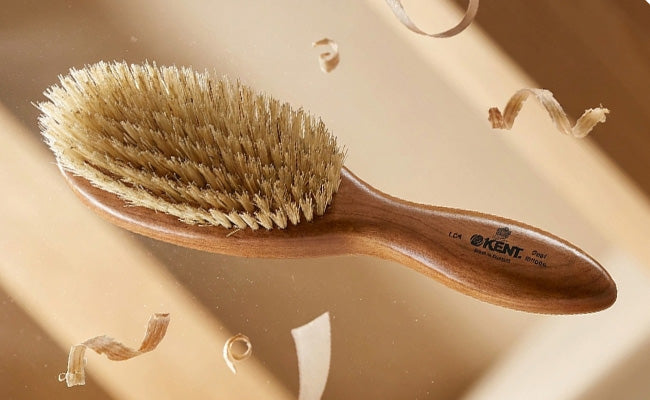
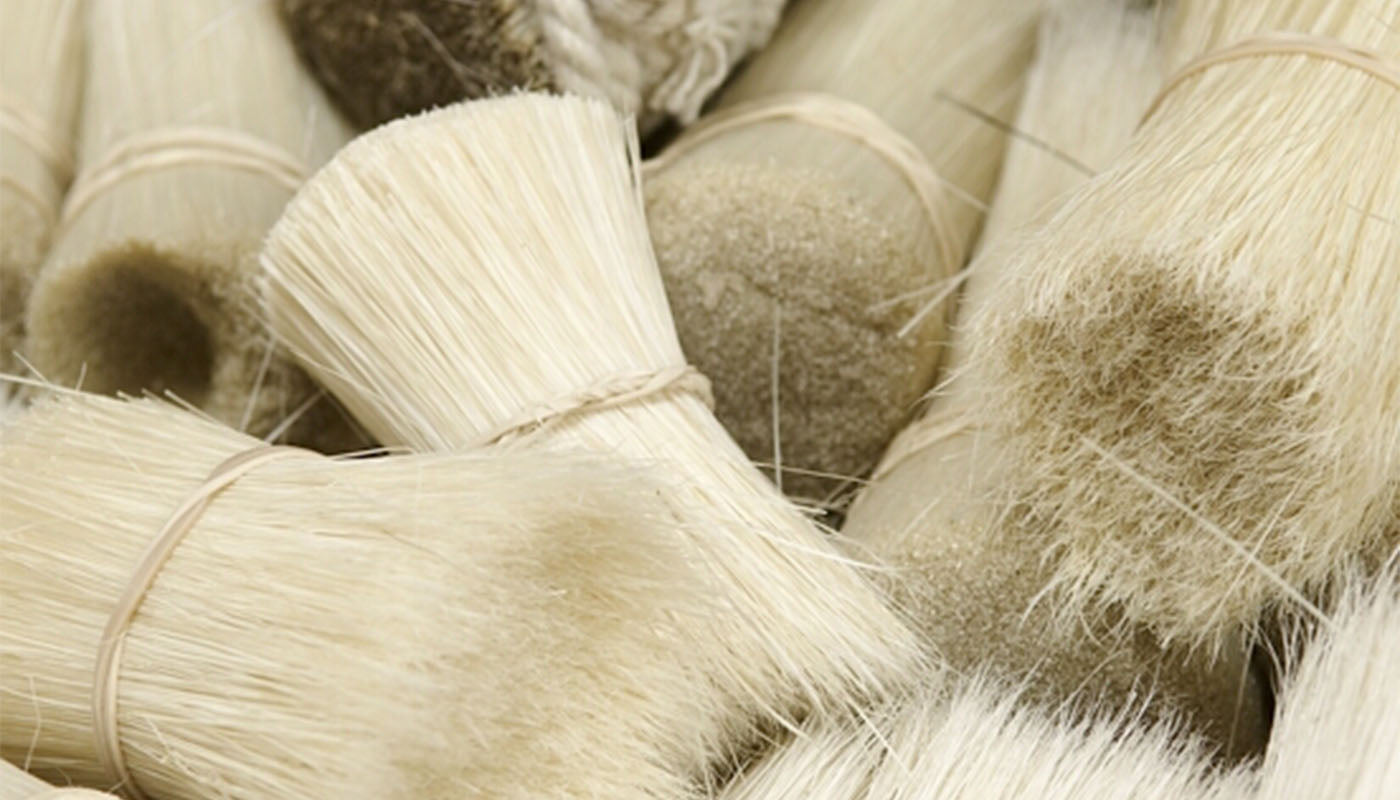
Boar bristle is natural hair harvested from wild or farmed boars. It has a unique structural advantage over synthetic fibers: its surface is covered in microscopic scales, similar in structure to human hair. This means the bristles can actually grip individual hair strands, distributing the scalp's natural oils (sebum) from root to tip with each stroke.
Synthetic bristles — nylon, plastic — are smooth at a microscopic level. They detangle well and create less friction, but they can't pick up and carry sebum the way natural bristle does. That oil distribution is the core reason boar bristle brushes produce shine, reduce frizz, and improve hair condition over time.
No product replicates this effect. Shine serums, conditioning sprays, and oils all sit on the surface of the hair. Boar bristle brushing moves your scalp's own oils — the exact formula your hair evolved with — down the full length of each strand.

What Does Boar Bristle Brushing Actually Do?
When used consistently, a boar bristle brush does several things:
Distributes natural oils. Sebum produced at the scalp is the best conditioner your hair has access to. Regular brushing moves it down the hair shaft, moisturizing the mid-lengths and ends that are farthest from the scalp and most prone to dryness and breakage.
Builds shine. The oil coating each strand creates a smooth, light-reflecting surface. After a few weeks of consistent boar bristle brushing, most people notice a significant improvement in natural shine — without product.
Reduces frizz. Frizz is largely caused by dry, rough outer cuticles that catch light unevenly and repel moisture erratically. Oil distribution smooths the cuticle layer, which reduces frizz over time. The mechanical action of the bristles also smooths the cuticle in each stroke.
Removes debris without stripping. Boar bristle picks up dead skin cells, product buildup, and environmental debris without the harsh mechanical scrubbing of a fine-tooth comb. Hair is left cleaner between washes without losing its natural moisture balance.
Stimulates the scalp. The gentle massage effect of bristles moving across the scalp increases circulation, which can improve scalp health over time. This is the same principle behind scalp massage tools, just built into your daily brushing routine.

Is Boar Bristle Right for Your Hair Type?
Boar bristle works best for certain hair types and less well for others. Here's the honest breakdown.
Fine to medium hair: This is the ideal use case. Fine hair has the least natural protection — it gets oily at the roots quickly and dry at the ends. Boar bristle brushes redistribute that scalp oil down the shaft, reducing the oily-roots-dry-ends pattern that many fine-haired people deal with. Fine hair also responds to the shine benefits more visibly than coarser types.
Normal hair: Works well for all the benefits listed above — shine, frizz reduction, and scalp stimulation. Most people with normal hair see noticeable improvement within a few weeks of consistent use.
Thick or coarse hair: Pure boar bristle brushes have softer, more closely-packed bristles that can struggle to penetrate thick or coarse hair down to the scalp. For thick or coarse hair, a mixed bristle brush (boar + nylon) is usually a better choice — the nylon tines penetrate and detangle while the boar bristles distribute oil and add shine. Pure boar bristle can still be used on thick hair for finishing and smoothing, just not as your only brush.
Curly or wavy hair: Boar bristle can work well on curly hair, but requires care. On dry curls, vigorous brushing will disrupt the curl pattern and create frizz. Boar bristle works best on curly hair when used on wet hair with conditioner in (to detangle gently), or on dry hair with a very light hand just to smooth the surface. If your goal is to preserve curl definition, use your boar bristle brush sparingly and carefully.
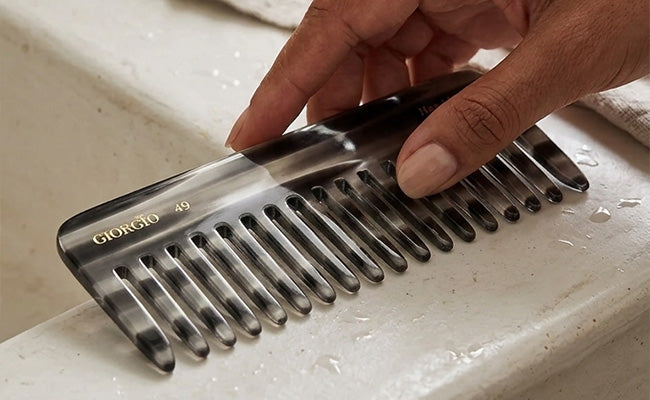
Very dry, damaged, or chemically treated hair: These hair types are most in need of the conditioning and oil-distribution benefits boar bristle provides. However, damaged hair is also fragile, so use a soft-bristle brush and gentle strokes. If your hair is extremely tangled, detangle first with a wide-tooth comb before using the boar bristle brush.

Pure Boar Bristle vs. Mixed Bristle: Which Should You Buy?
Pure boar bristle brushes have bristles made entirely of natural boar hair. They provide maximum oil distribution and shine benefits, but have less detangling power. Best for fine, straight, wavy, or normal hair that doesn't require much detangling.
Mixed bristle brushes combine boar bristle with nylon pins. The nylon pins penetrate and separate thicker strands; the boar bristles follow and distribute oil. Best for thick, coarse, or harder-to-detangle hair types. Mixed bristle brushes are also good for people who want some of the boar bristle benefits but find pure bristle can't get through their hair.
If you're unsure which to choose: fine or medium hair → pure boar bristle. Thick, coarse, or hard-to-detangle hair → mixed bristle.
How to Use a Boar Bristle Brush Correctly
The technique matters. Most people brush incorrectly and get fewer results than they should.
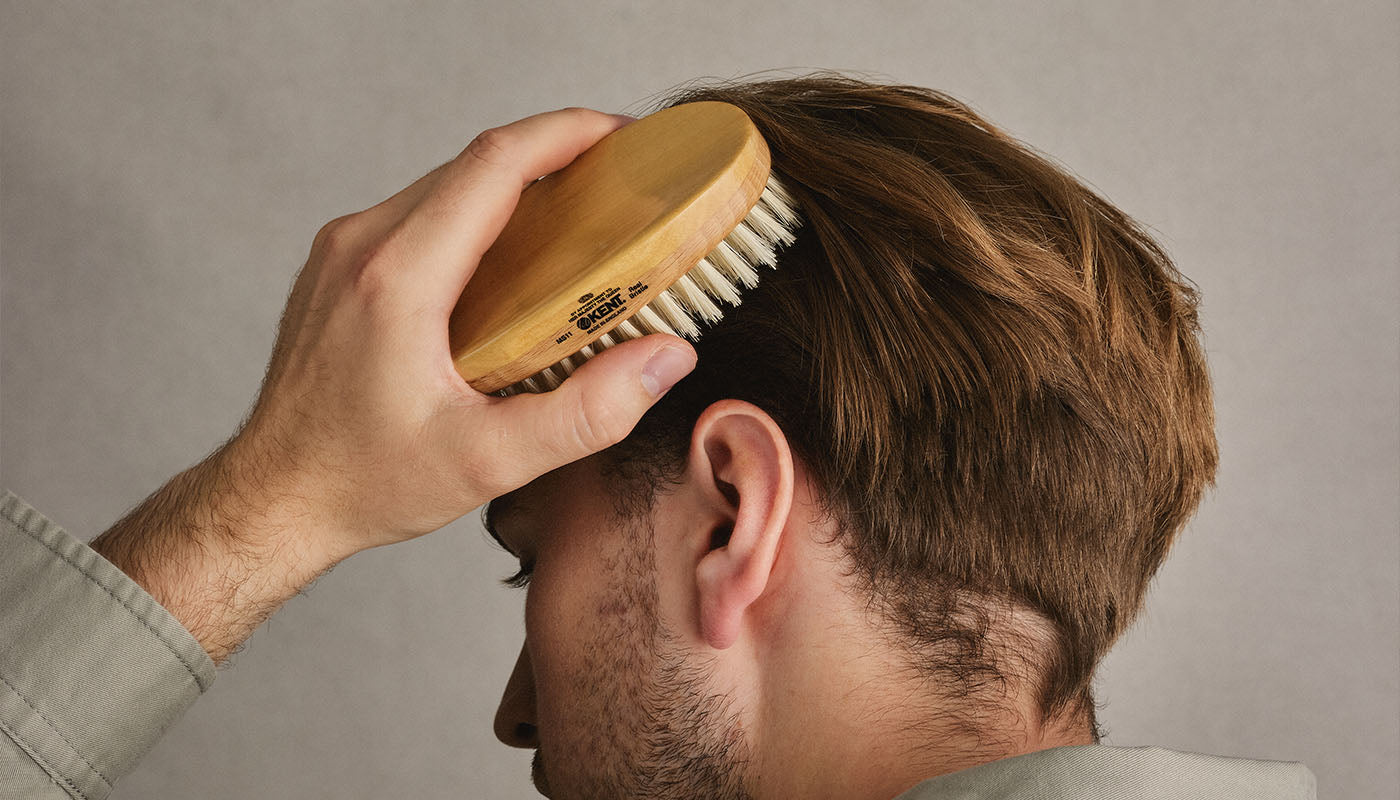
Start at the scalp, not the ends. Place the brush at the roots and draw it firmly down to the ends in a smooth, continuous stroke. This is how oil gets moved from root to tip. Short, choppy strokes at the mid-lengths don't accomplish the same thing.
Use firm, consistent pressure. The bristles need to make contact with your scalp to pick up oil. Feather-light strokes won't do it. You should feel the brush on your scalp with each pass.
Brush in sections. Work around your head systematically — left side, right side, back, top — so you cover every area of the scalp. Sporadic brushing misses sections and produces uneven results.
Aim for 50–100 strokes per session. The old "100 strokes a day" advice has some basis in reality. Consistency and volume of strokes matter. 50 good strokes daily will produce results; 10 casual strokes won't.
Brush on dry hair. Boar bristle brushes work on dry hair for oil distribution and shine. For detangling, work on slightly damp hair if needed, but be gentler — wet hair is more prone to breakage.
Be patient. The full benefits of boar bristle brushing take 2–4 weeks to become visible, especially if your hair is currently product-heavy or your scalp is imbalanced. Stick with it.
How to Clean and Maintain a Boar Bristle Brush
A quality boar bristle brush will last 10–20 years if properly maintained. Most people neglect their brushes entirely.
Remove hair after every use. Use a comb or your fingers to pull trapped hair out of the bristles after each session. Hair buildup left in the brush redeposits debris back into clean hair and shortens bristle life.
Deep clean every 2–4 weeks. Fill a bowl with lukewarm water and a small amount of gentle shampoo. Swirl the brush bristle-side down — do not submerge a wood-backed brush fully, as this can warp or crack the wood. Rinse under cool running water until the water runs clear, then shake out excess moisture and dry bristle-side down on a towel.
Never use hot water. Hot water can loosen the glue that holds bristles in the pad and can damage natural bristle over time. Lukewarm or cool water only.
Dry thoroughly before using again. A wet brush used on dry hair will create frizz and the bristles will feel limp. Give the brush 12–24 hours to dry completely after washing.
Store bristle-side up or in a case. Resting bristle-side down on a hard surface flattens and bends the bristles over time. Store upright or in a brush roll.
Which Boar Bristle Brush Should You Buy?
Here are our top recommendations by hair type and use case, from the Kent range we carry at Bayside Brush Co.

Best for Fine to Normal Hair: Kent MG2 Military Brush
The Kent MG2 is a compact oval brush designed to be used palm-down, a technique that naturally applies even pressure across the scalp. The pure boar bristles are medium-firm — firm enough to penetrate fine hair to the scalp, soft enough not to cause scalp irritation. The military brush format has been the standard for men's grooming for over a century, but works equally well for women with fine hair who want a more controlled brushing experience. Compact enough for travel.

Best for Medium to Thick Hair (Daily Use): Kent OG2 Rectangular Club Brush
The Kent OG2 is a full-size rectangular brush with a beechwood handle. The wider head covers more surface area per stroke, making it efficient for longer or thicker hair. The black pure boar bristles are slightly firmer than the MG2, which helps penetrate medium to moderately thick hair. This is the brush to reach for if you want to complete a full 100-stroke session without your hand getting tired.

Best for Fine or Thinning Hair: Kent LS9D Narrow Satinwood Brush
The Kent LS9D uses soft white boar bristle set in a narrow satinwood pad. The narrow profile is designed for precision brushing, ideal for fine or thinning hair where gentleness matters as much as performance. The white bristle is softer than the black bristle used in the MG2 and OG2 — less penetrating, more conditioning. If your scalp is sensitive or your hair breaks easily, this is your brush.

Best Cushion Brush (Mason Pearson Alternative): Kent CSGL Classic Shine
The Kent CSGL is a cushion-pad oval brush — the format most associated with Mason Pearson — with pure white boar bristle set into a flexible rubber pad. The cushion allows bristles to flex and conform to the scalp's contours rather than pushing against it rigidly, resulting in a noticeably gentler experience with better full-scalp contact. If you've been considering a Mason Pearson and want to understand what a quality cushion brush feels like at a significantly lower price point, this is the right introduction. For those with very fine or sensitive hair, the Kent CSFS offers the same cushion format in a softer bristle and smaller size.

Best Women's Oval Brush: Kent OG1 or Kent LC22
For a classic ladies' oval brush, the Kent OG1 in satinwood is the traditional choice — well-proportioned, pure boar bristle, suited to daily use on fine to normal hair. If you prefer something with more visual character, the Kent LC22 features cherrywood construction with black boar bristle — a handsome brush that presents well on the vanity and performs equally well in regular use. Both are full-size oval brushes in the classic format.

Best for Blow-Drying: Kent LBR1 and LBR2 Round Brushes
Flat boar bristle brushes are not designed for blow dryers (see the FAQ below). If you want to blow-dry with natural bristle, you need a round brush. The Kent LBR1 (45mm diameter, small) and Kent LBR2 (medium diameter) are pure boar bristle round brushes built for heat styling. The cylindrical barrel grips sections of hair and shapes them as the blow dryer passes over, adding volume, smoothing the cuticle, and building bend at the ends. The LBR1 suits shorter hair, fringes, and tighter styling; the LBR2 handles medium-length hair and softer waves.

Best for Travel: Kent LR23 Handbag Brush
The Kent LR23 is a compact dantawood brush with pure white boar bristles sized to fit in a handbag or travel case. Small enough to take anywhere without sacrificing bristle quality — the same Kent boar bristle construction as the full-size brushes, just scaled down. If you want consistent boar bristle results while traveling, or want a brush you can carry daily, this is the right choice.

Best for Beards and Mustaches: Kent BRD2
The Kent BRD2 is a purpose-built beard and mustache brush with specially cut natural white boar bristle. Boar bristle conditions facial hair the same way it conditions scalp hair — distributing the skin's natural oils through the beard and smoothing each strand's cuticle. The BRD2 trains and shapes beard hair, distributes beard balm or oil evenly, and keeps the beard well-groomed between washes. If you have a beard of any significant length, a dedicated boar bristle brush belongs in the routine.
Common Questions
How long does it take to see results?
Most people notice a difference in shine and texture within 2–3 weeks of consistent daily use (50+ strokes). If your hair is currently very dry or heavily product-coated, give it 4 weeks. The improvement is cumulative — the longer you use a boar bristle brush consistently, the better the results.
Will a boar bristle brush make my hair oilier?
In the first week or two, some people experience a temporary increase in oiliness as the brush begins distributing sebum that's been accumulating at the roots. This normalizes. After a few weeks, many people find they can wash their hair less frequently because the oil is distributed more evenly and the roots don't build up as fast.
Can I use a boar bristle brush with heat tools?
Standard flat-backed boar bristle brushes are not designed for use with blow dryers — the heat can damage the bristles and the handle. For blow-drying with natural bristle, use a round brush built for heat styling. The Kent LBR1 (small) and Kent LBR2 (medium) are pure boar bristle round brushes designed exactly for this purpose. Reserve your flat boar bristle brush for dry brushing and finishing.
Is boar bristle ethical?
Boar bristle is a byproduct of the pork industry — it comes from the same animals raised for food. It is not sourced from animals raised exclusively for their bristles. Manufacturers like Kent source bristle from suppliers with established quality and sourcing standards. If you have concerns, mixed bristle brushes (boar + nylon) use less natural bristle while still providing conditioning benefits.
Continue reading:
- Nylon vs. Boar Bristle Hair Brush: Which Should You Use?
- Kent vs. Mason Pearson: Which Premium Hair Brush Is Actually Worth It?
- The Only Guide You Will Need To Determine Your Natural Hair Type

Leave a comment
This site is protected by hCaptcha and the hCaptcha Privacy Policy and Terms of Service apply.